The story of Water Island
A Danish plantation, a wartime fort, a family hotel and, since 1996, a small neighborhood with its own traditions. This is how a 491-acre island at the edge of Charlotte Amalie harbor got here.
Before 1600
The first islanders
Taíno people lived here before Europeans reached the Caribbean. Archaeologists from the National Park Service excavated both prehistoric and historic sites on the island in 1998.
1686 to 1848
A Danish watering stop
The name is usually traced to the island’s freshwater ponds, which made it a place for passing ships to fill their casks. A Danish hunting party in 1686 found pelicans, flamingos, wild goats and cattle here, and a map of 1718 marks “Water Island Haven”.
Under Danish rule the island was divided into plantations worked by enslaved Africans; sixty people were enslaved here by 1786. Around 1800 the island was split into two estates: Caroline’s Lyst to the north-east, near today’s Carolina Point, and La Providence to the south-west, near Providence Point. Slavery in the Danish West Indies ended with emancipation in July 1848.
1917
Left out of the sale
When the United States bought the Danish West Indies in 1917, Water Island was not part of the deal. It belonged to the Danish East Asiatic Company, which American officials suspected of fronting for German naval interests.
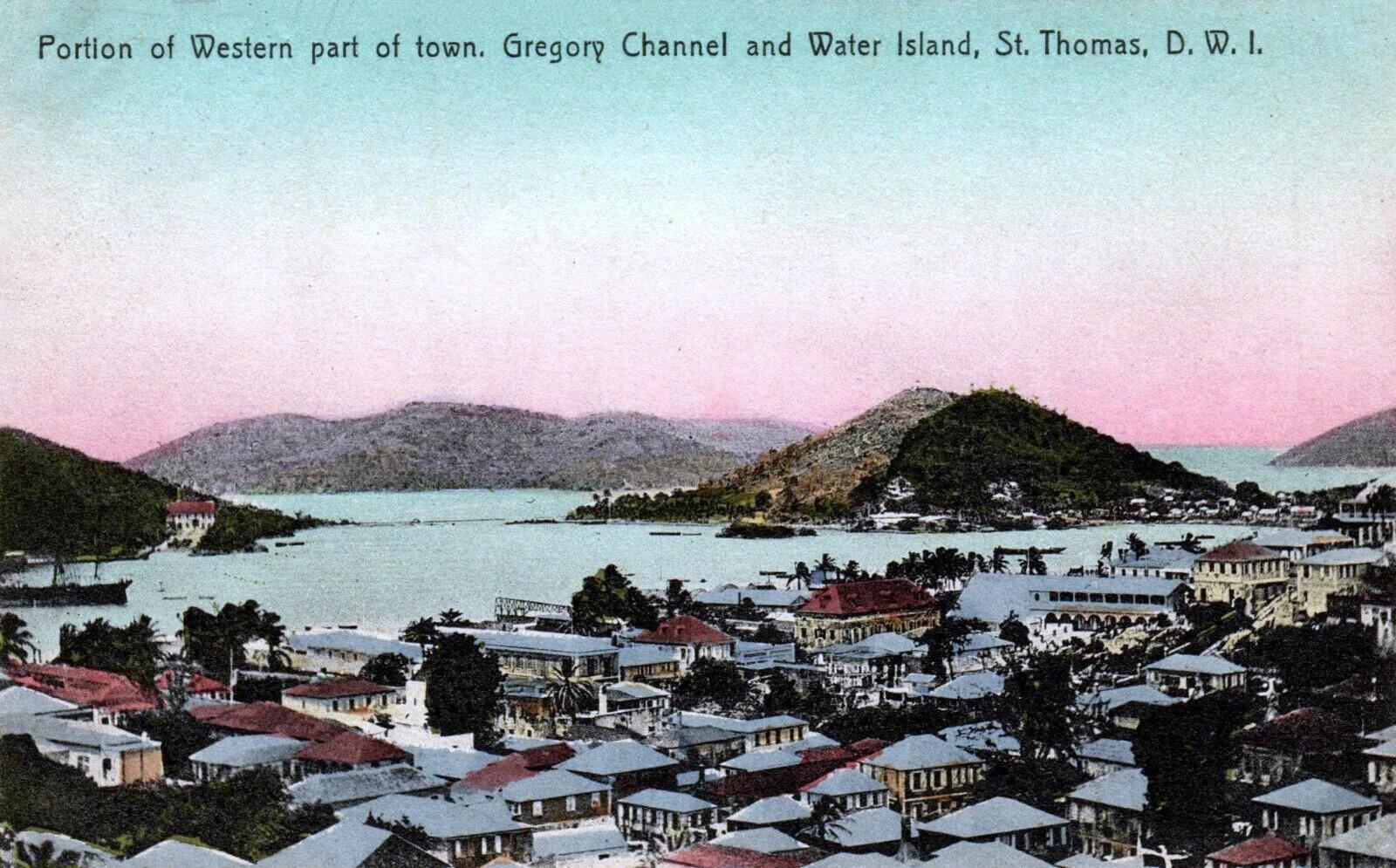
Charlotte Amalie, the Gregerie Channel and Water Island, about 1910Photo: John N. Lightbourn, publisher, Public domain 1944 to 1950
Fort Segarra and the Army years
The U.S. government bought the island in 1944 for $10,000 to defend the harbor. The Army built gun emplacements, searchlights and an underground magazine on the southern hill, and named the fort for Lieutenant Colonel Rafael Angel Segarra of Puerto Rico. The war ended before it was finished, and work stopped in 1946.
From 1948 to 1950 the Army Chemical Corps ran six tests of chemical munitions on the island before moving the program to Utah. Surveys since 1995 have found nothing left behind, and in 2021 the Army Corps of Engineers decided no further action was needed.
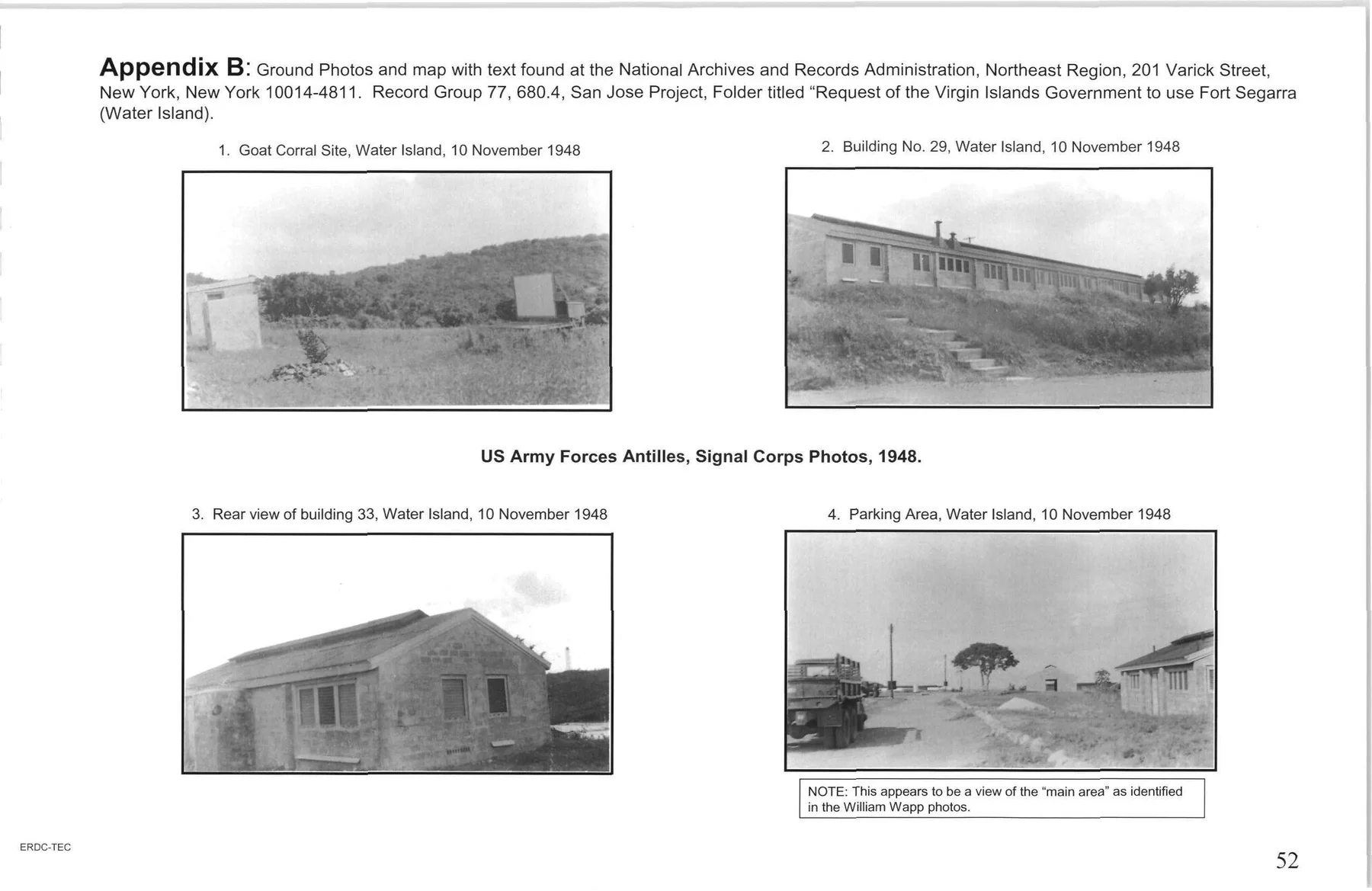
Army Signal Corps photographs of the island’s buildings, November 1948Photo: U.S. Army Signal Corps, reproduced by the U.S. Army ERDC, Public domain 1951 to 1989
Walter and Floride Phillips
In 1951 Walter Phillips, a Texan who had spent thirty years on Wall Street, leased the island with his wife Floride. They turned the Army buildings into the Water Island Hotel, which opened on New Year’s Day 1954, and built Honeymoon Beach out of a rocky stretch of shore.
Settlers followed. The Saturday Evening Post visited in 1956 and found them living “in converted gun emplacements and former latrines.” The hotel grew into the Colony Club in the 1960s and reopened as the Sugar Bird Hotel in 1977. Some islanders count it among the inspirations for Herman Wouk’s 1965 novel Don’t Stop the Carnival, though Hassel Island and St. Croix have their own claims.
Hurricane Hugo wrecked the hotel in September 1989, and it never reopened.
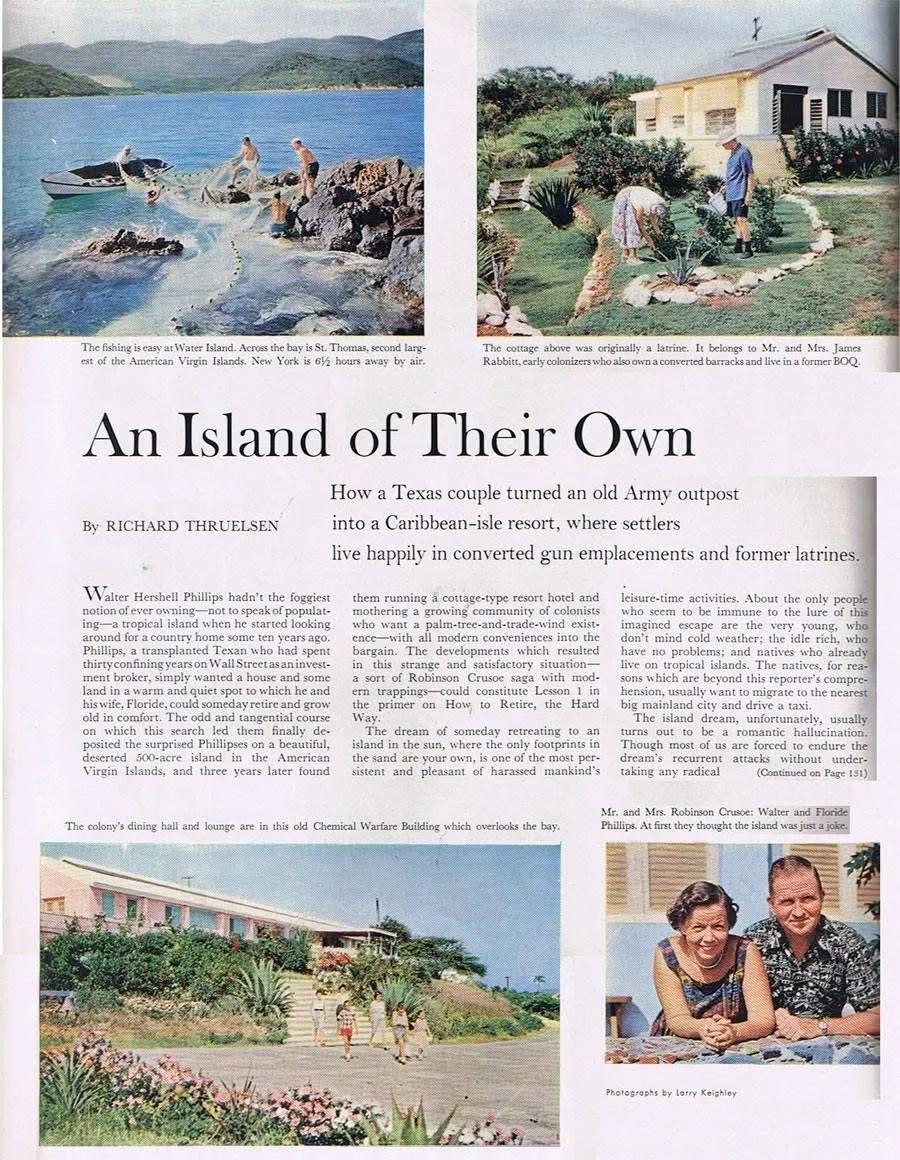
“An Island of Their Own”, The Saturday Evening Post, December 1956 1996
The fourth Virgin Island
On December 12, 1996, the federal government handed Water Island to the Territory of the Virgin Islands at a ceremony on the island. Longtime leaseholders bought their land, and the government took the roads, Honeymoon Beach and the old hotel site. Islanders still mark the anniversary every December.
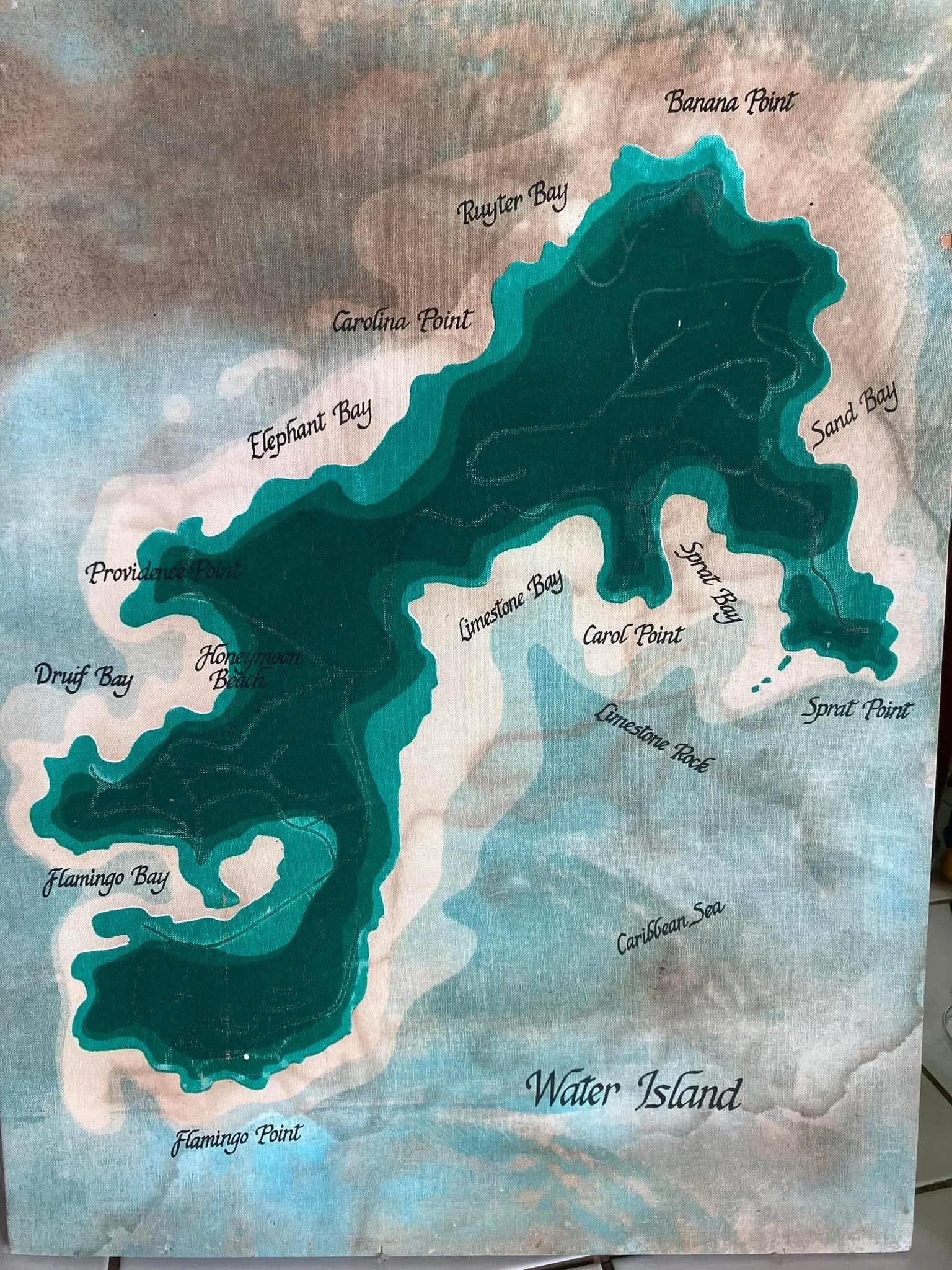
A hand-painted map of the island’s bays and points 2007 to 2017
Film crews and hurricanes
In 2007 scenes for The Curious Case of Benjamin Button were filmed on Honeymoon Beach. Ten years later, Hurricanes Irma and Maria destroyed dozens of homes. The community, about 160 people at the 2020 census, rebuilt.
2026
What’s next
A restoration of Fort Segarra is adding railings, lighting and 22 interpretive signs. In August 2026 the territory approved a 99-year lease for a resort, marina and homes on government land. Honeymoon Beach was taken out of the lease and stays public.
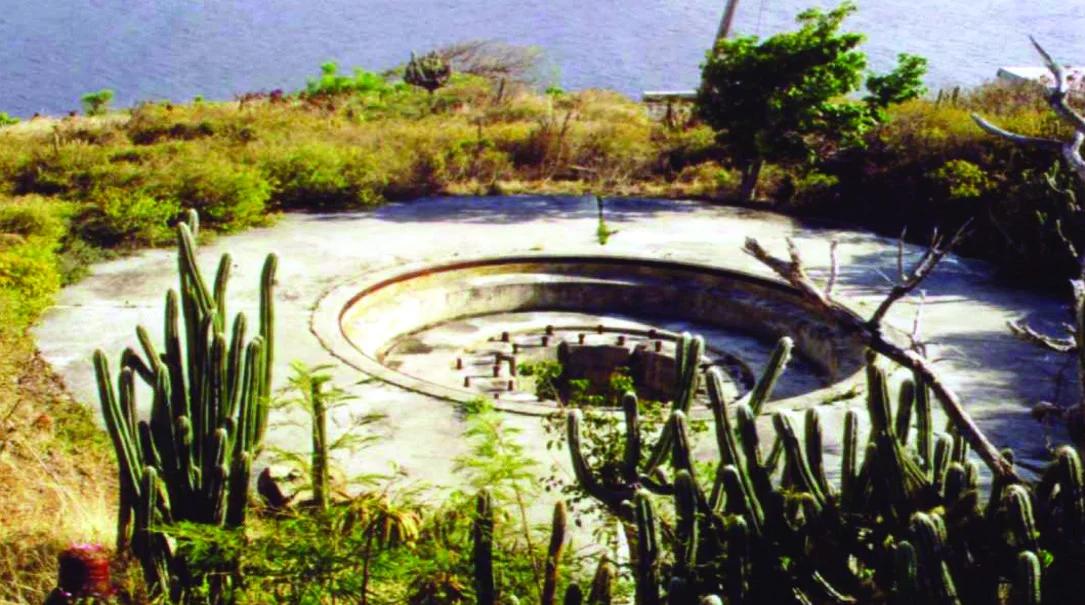
A Fort Segarra gun emplacement before the restoration, 2022Photo: U.S. Army Corps of Engineers, Public domain

Sources include the Water Island Civic Association’s history project, the U.S. Army Corps of Engineers, the U.S. Census Bureau and the Government of the Virgin Islands.